
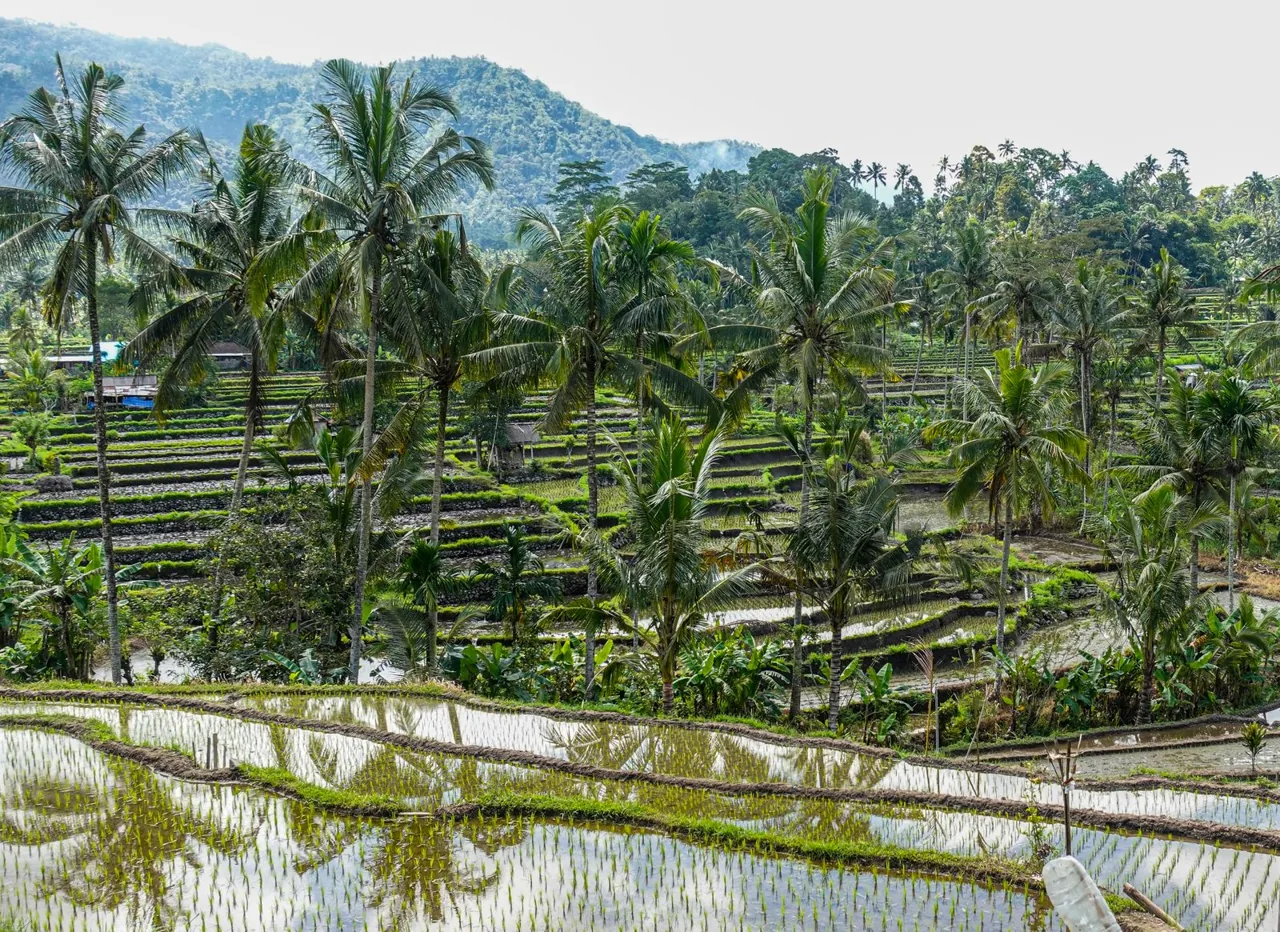
Part of what you pay for at a great Bali estate is the view — and the finest views on the island are not of the sea but of its terraced interior, those staircases of green that fall away from the hills. It is worth knowing that this scenery is not wild at all, but one of the most sophisticated agricultural landscapes humans have ever made.
A thousand years of water
The terraces are fed by the subak, a cooperative irrigation system that has shared the island's water among rice farmers for over a millennium. Governed through village temples and a philosophy of balance between people, nature and the divine, the subak system is recognised as a cultural landscape of global importance. Those postcard terraces are, in effect, a living monument.
Why it matters to where you stay
Estates set among working rice fields — around Ubud, Tabanan or the greener fringes of Canggu — offer something the coastal villas cannot: a front-row seat to this rhythm. You wake to ducks working the paddies, watch the light move across the terraces through the day, and fall asleep to frogs. It is a quieter, deeper kind of luxury than a beach address.
Tread lightly
Staying in this landscape carries a small responsibility. The terraces are someone's livelihood and heritage, not a backdrop; the best estates work with their neighbours rather than over them. Choose one that does, and your view comes with a clear conscience as well as a spectacular outlook.