
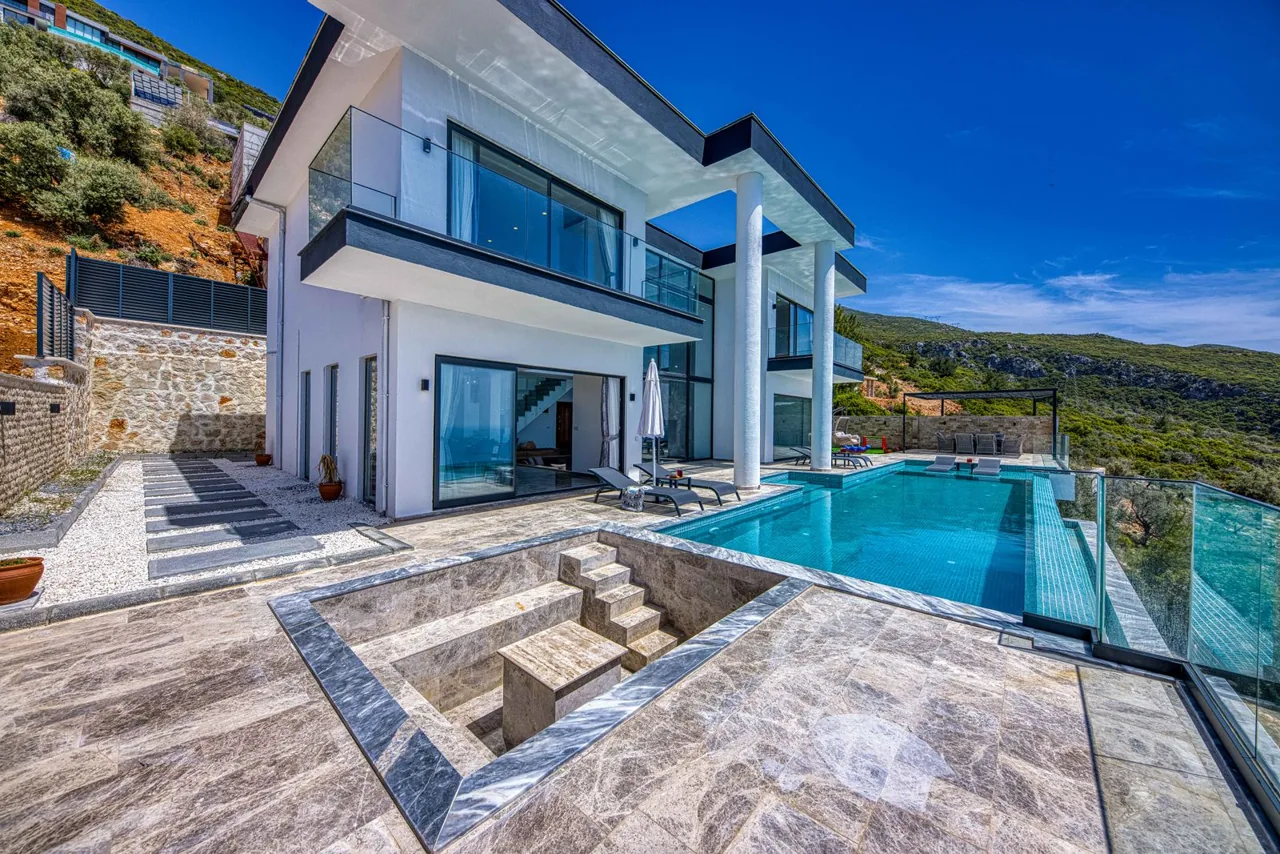
Bali's villas are not one thing. Behind the shared vocabulary of pool, garden and open living space sit several distinct architectural traditions, each offering a different experience of the tropics. Knowing which language a villa speaks tells you more about how it will feel to live in than any amenity list.
The traditional pavilion
The oldest and most romantic style is the joglo or bale — an open-sided timber pavilion with a soaring thatched or shingled roof, drawn from Javanese and Balinese vernacular architecture. These houses breathe: living spaces have no walls to speak of, and the garden flows straight through. They are magical, and they ask you to accept insects, weather and a certain porousness as part of the deal.
Tropical modernism
The dominant style of the past twenty years is tropical modernism — clean lines, flat roofs, polished concrete and vast sliding glass, softened by timber and stone and organised around a pool. The best examples, admired in design journals like Dezeen, achieve real drama while still opening generously to the climate. The weakest feel like air-conditioned boxes that could sit anywhere.
The considered hybrid
Increasingly, the finest new villas blend the two: a glazed, cooled sleeping wing for comfort, paired with open-air living pavilions for romance. This hybrid answers the real question every visitor faces — how much of the tropics do you actually want to let in? A great villa gives you both, and lets you choose day by day.